
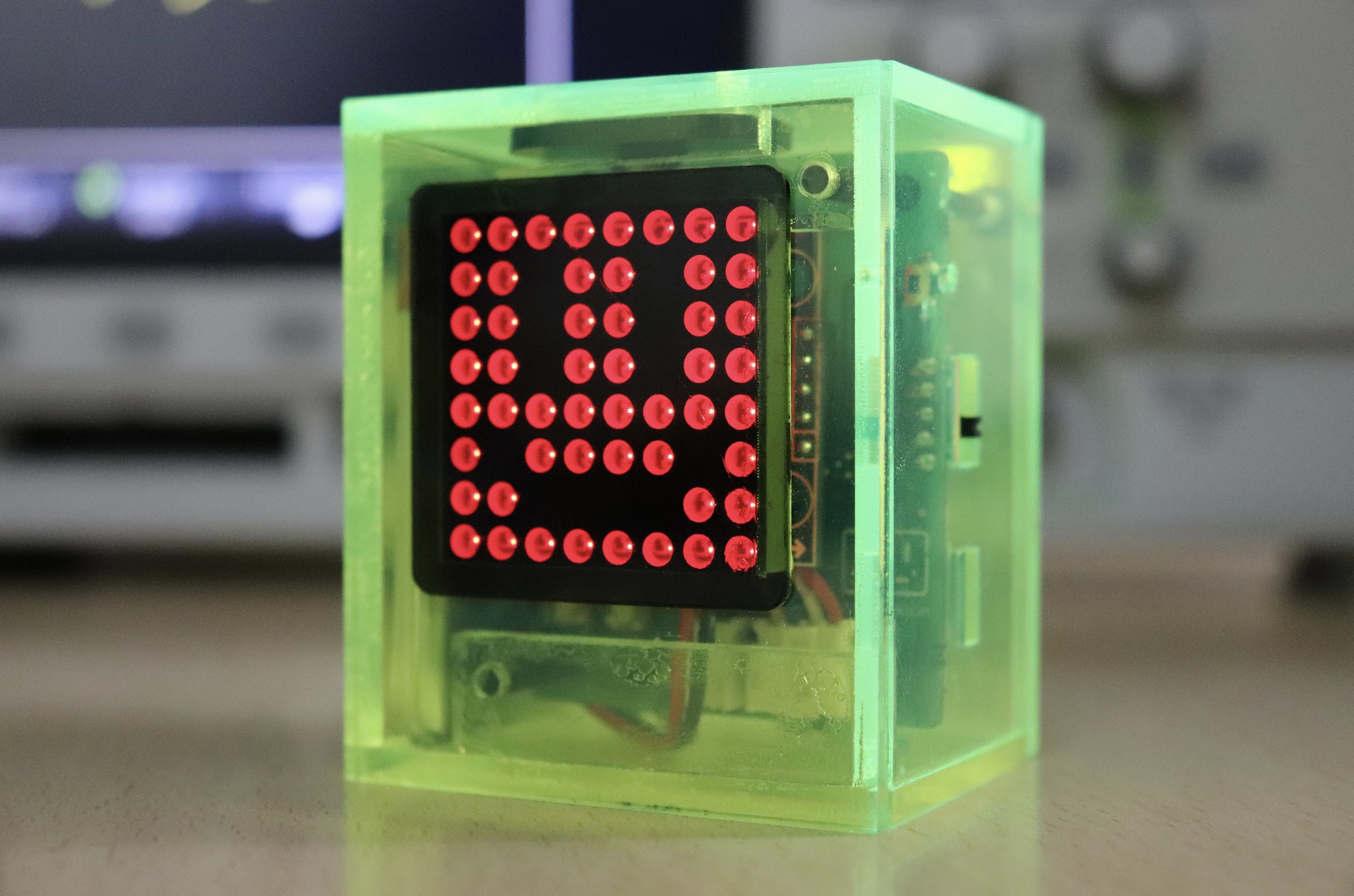
Most IoT education starts in the wrong place — with breadboards, loose wires, and abstract firmware tutorials that lose students before they've built anything meaningful. The Design Innovation Center, Delhi wanted a completely different approach: give students a finished, working product first, then teach them how it works and how to extend it. The brief was to design and build an IoT learning kit that was tactile, fun, and genuinely open for tinkering.
“Build a product first.
Then teach how it works.”
— Design Innovation Center, Delhi · Project brief
We designed Choko from the inside out — starting with the PCB before touching the enclosure. The custom board centres on an Espressif WiFi chipset, chosen for its mature ecosystem and the fact that virtually every serious IoT product in the world runs on it. The 8×8 LED matrix gives immediate visual feedback for every interaction, making abstract concepts like network requests and API calls feel tangible. We then built the Laravel web app to give users a browser-based interface to control the device, send messages to the matrix, trigger animations, and call open API endpoints — no USB cable required. The acrylic enclosure was designed to be transparent deliberately: we wanted students to see the electronics inside, to demystify the hardware rather than hide it.
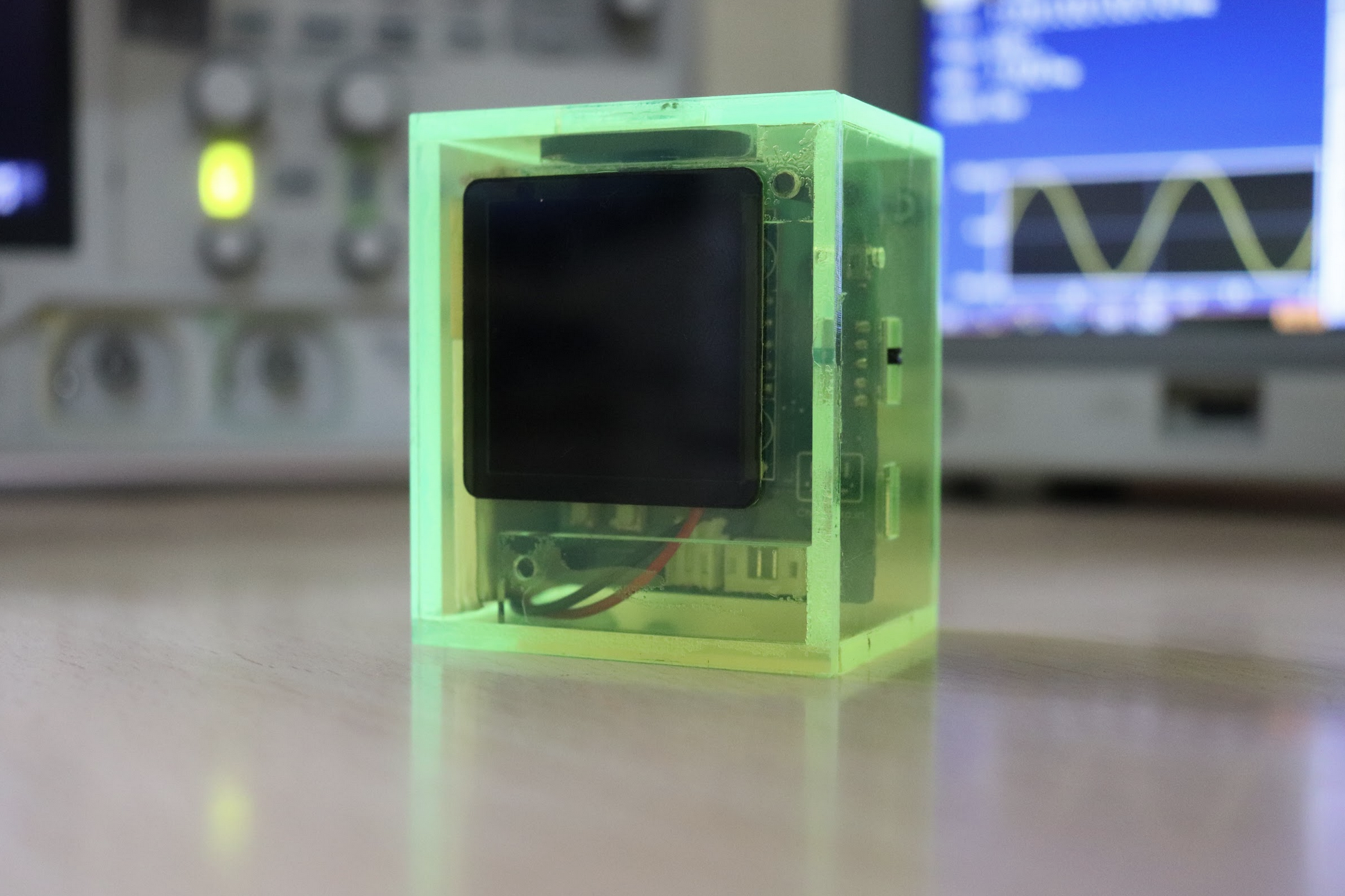
Choko · Transparent acrylic enclosure
with 8×8 red LED matrix
Built with Laravel and an open REST API — control your Choko from any browser, script, or application.
Choko was deployed across college workshops run by the Design Innovation Center. Students left each session with a working device they had programmed themselves, a completion certificate, and a mental model for how connected products actually work. The kit sold as a standalone product for hobbyists and hackers who wanted a programmable, WiFi-connected display they could build on.